Sourcing HVAC equipment from Türkiye works when two files are built in parallel: a supplier audit that proves real factory capability, and a product-compliance file that matches the destination market. Official references: EU–Türkiye customs union guidance, EU ecodesign rules for ventilation units, the Turkish Trade Registry and the Turkish Standards Institution (TSE).
Why is Türkiye a serious HVAC sourcing base?
Industrial goods move between Türkiye and the EU inside the customs union: with an A.TR movement certificate they circulate free of customs duty, and Türkiye aligns its technical legislation with the EU under the same framework. Add short logistics to Europe and a deep manufacturing pool for air handling units, fan coils, radiators, boilers and ventilation fans, and the lane is attractive. None of that replaces buyer-side verification of the individual factory.
Which official registries verify a Turkish HVAC supplier?
Start with the company identity, not the catalogue. Every Turkish company has a unique MERSIS registry number, and the Turkish Trade Registry Gazette records incorporation, capital, signatories and status changes. Then ask for the chamber-issued capacity report (kapasite raporu), which documents the machinery, production capacity and personnel a company actually has. That single report is the fastest way to separate a real manufacturer from a trading intermediary with a factory backdrop.
What should the factory audit cover for HVAC products?
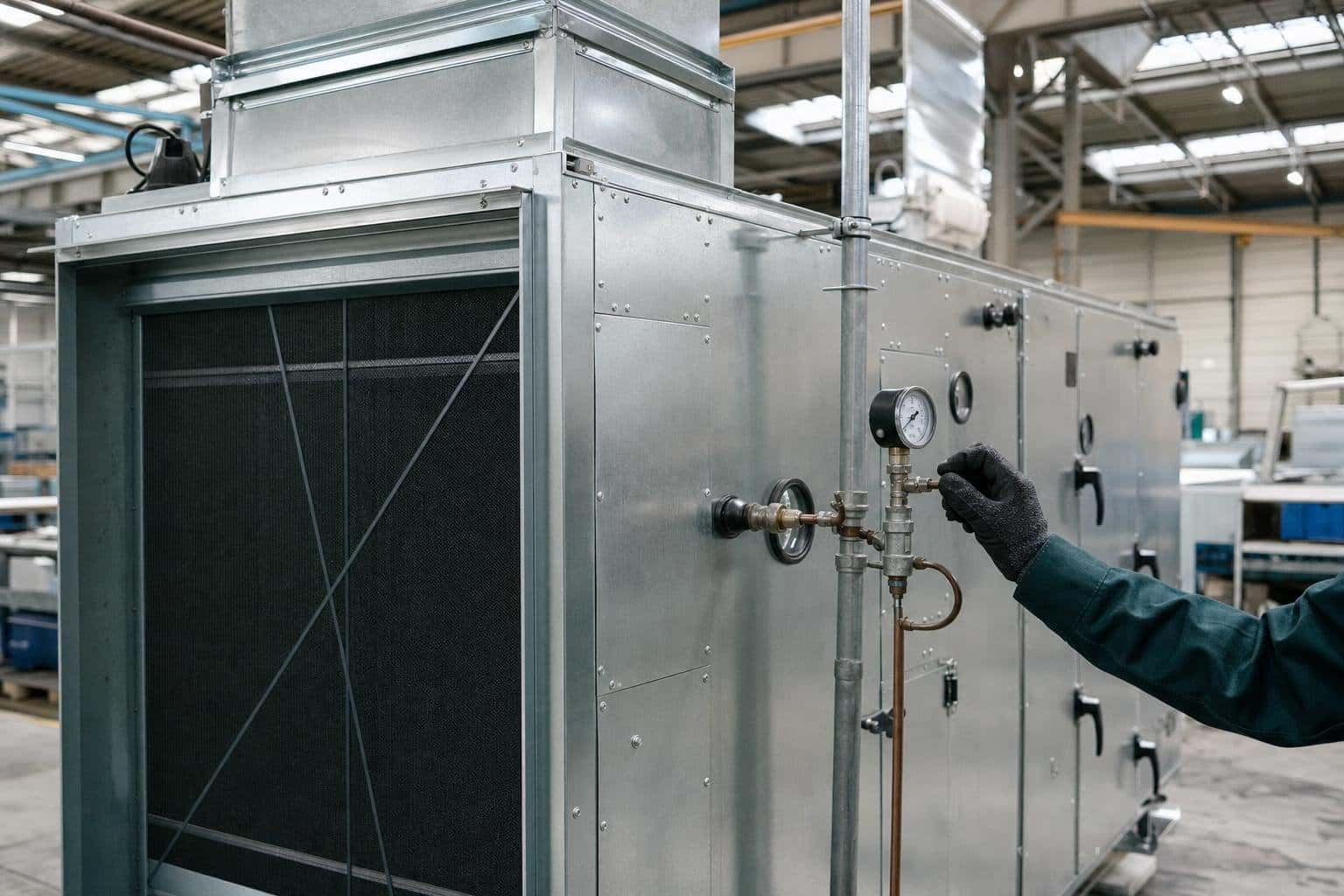
Audit the production chain, not the showroom: sheet-metal and coil lines, heat-exchanger manufacturing or its subcontracting map, brazing and welding qualifications, leak and pressure test benches, performance testing capability and calibration records. Review quality-system certificates against scope, check batch traceability, and confirm which process steps are outsourced. An HVAC unit is a system; the audit must show the supplier controls every step that affects performance and safety.
Which EU compliance rules typically apply to HVAC families?
It depends on the product family. Machinery rules apply to most powered units, with the EU machinery framework currently transitioning to a new regulation. Electrical safety and electromagnetic compatibility rules cover powered equipment, ecodesign requirements apply to ventilation units, pressure equipment rules capture boilers and pressure-bearing parts, and refrigerant-containing equipment falls under the EU F-gas regime. Map your exact product to its directives before the first order, and ask the supplier for the EU declaration of conformity and the technical file behind it.
How does Türkiye’s own CE framework help buyers?
Türkiye mirrors the EU CE framework in domestic law through its product safety and technical regulations legislation, so established Turkish manufacturers already work with declarations of conformity, technical files and notified bodies. The Turkish Standards Institution (TSE) also runs national certification marks; treat TSE or TSEK marks as quality signals under Turkish standards, not as substitutes for CE conformity in the EU market.
Which export controls and documents should the order plan for?
Plan the document set with the commercial terms: A.TR movement certificate for EU-bound shipments, commercial invoice and packing list aligned with the technical description, and the declarations of conformity for the exact models shipped. Türkiye also operates TAREKS, a risk-based electronic product-safety inspection system applied to certain traded goods; whether a given HVAC line is in scope follows the current-year communiqués, so have the supplier confirm against the applicable list before shipment week.
How should the first order be structured?
Freeze a dated technical specification, approve a golden sample, and witness a performance or pressure test on the pilot batch where the product family justifies it. Stage payments against inspection gates rather than calendar dates, and write deviation handling into the purchase order. A supplier that resists an inspection gate on the first order is telling you something about batch two.
FAQ
Does the A.TR certificate make CE compliance unnecessary?
No. A.TR removes customs duty inside the customs union; conformity obligations for the product family still apply in full.
Is a TSE mark the same as CE marking?
No. TSE and TSEK are national certification marks under Turkish standards; CE marking is the EU conformity marking and follows its own directives.
Can Corpenza certify HVAC products?
No. Corpenza coordinates supplier verification, audits and order controls; product conformity remains the manufacturer’s and importer’s responsibility.
For a buyer-side sourcing plan covering registry checks, factory audits and order controls in Türkiye, speak with Corpenza production and manufacturing services and contact Corpenza.
This is general information, not legal or product-compliance advice. Applicable directives, inspection regimes and documentation depend on the exact product family and destination market; confirm current official requirements before ordering.