

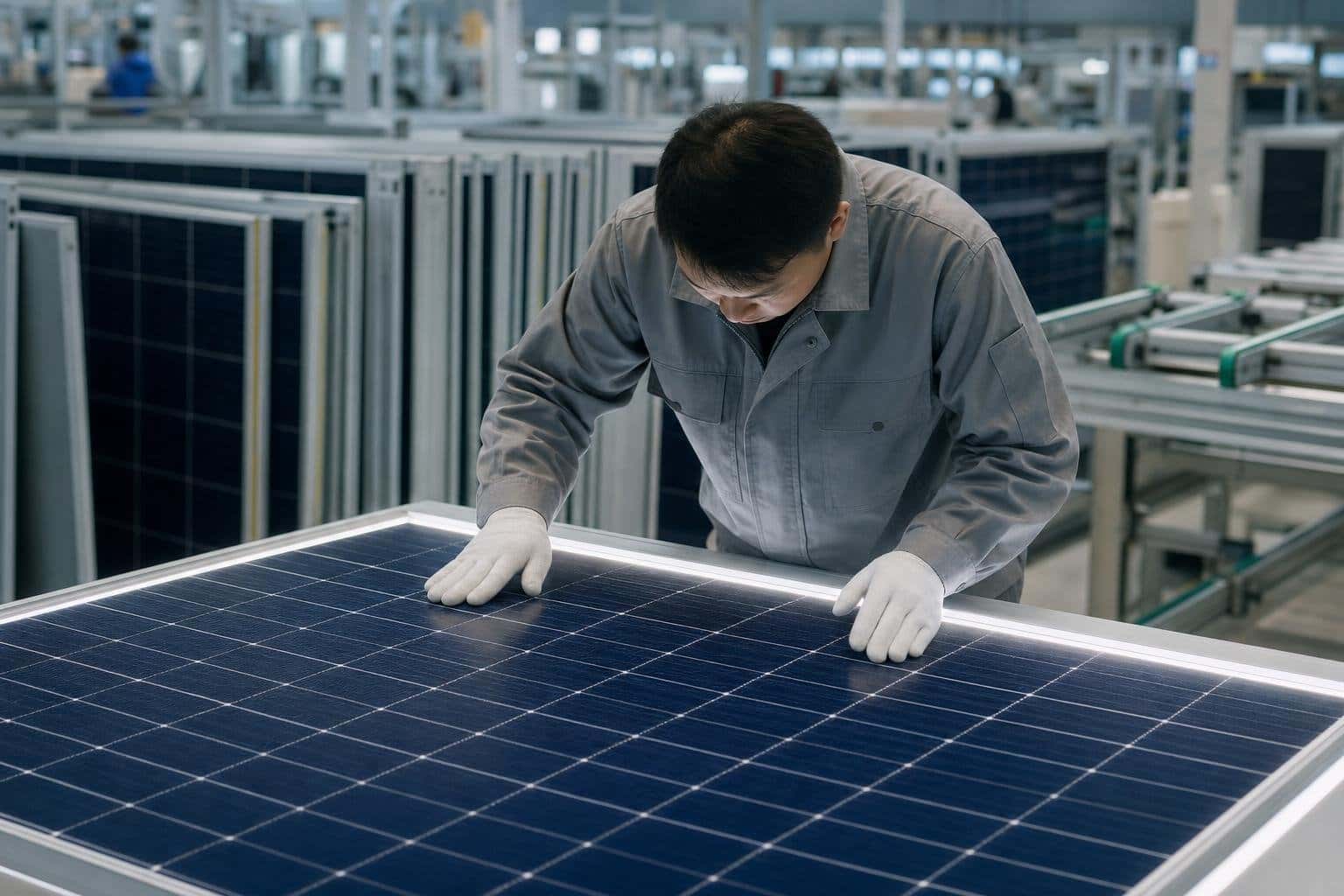
Turkey has become a serious base for PV module manufacturing. Here is how buyers verify a factory, audit quality and build a clean import documentation file. Official references: the European Commission page on the EU–Türkiye Customs Union, the Commission note on electronic A.TR movement certificates and the Invest in Türkiye announcement on the country's largest PV module plant. For the wider sourcing playbook, see our guides on negotiating manufacturing contracts in Turkey and the Turkey RFQ, samples and quality-control checklist.
Why source solar equipment from Türkiye?
Türkiye combines a growing photovoltaic manufacturing base with a customs advantage into Europe. The official Investment Office has announced the commissioning of the country's largest PV module plant, and module makers keep adding capacity. For EU buyers, the EU–Türkiye Customs Union means industrial goods in free circulation move with an A.TR movement certificate rather than a preferential-origin file, which simplifies duty treatment. The commercial case still stands or falls on supplier verification, not on geography.
How do you confirm a Turkish solar supplier legally exists?
Start with identity, not brochures. Ask for the trade registry record and MERSIS number, the tax registration, and the signature circular showing who may bind the company. Match the legal title on the proforma invoice with the registry record and the bank beneficiary. Confirm whether you are dealing with the manufacturer itself or a trading company reselling third-party modules; both can be legitimate, but warranty, spare-part access and audit rights differ sharply.
What should a factory visit or audit actually check?
Walk the real production sequence: cell stringing, layup, lamination, framing, junction-box mounting and final testing. Ask to see electroluminescence test stations and flash-test records tied to serial numbers, incoming-material controls for cells, glass, EVA and backsheet, and how the factory segregates rejected modules. Review capacity claims against line counts and shift patterns, and ask which production steps are subcontracted. A one-day visit that follows one order through the line beats a showroom tour.
Which certificates matter for solar modules and inverters?
For modules, buyers typically require IEC 61215 design-qualification and IEC 61730 safety certification issued by an accredited body; check the certificate holder name, module type designation and validity rather than accepting a PDF logo. Inverters and electrical components sold into the EU need CE marking with the supporting declarations. Ask for the exact test reports behind each certificate and confirm that the model you are buying, not a sibling model, is the one certified.
What does the A.TR movement certificate cover, and what does it not?
The A.TR certificate documents that industrial goods are in free circulation within the EU–Türkiye Customs Union, which is what allows duty-free movement for in-scope products. Since 8 July 2024 the Commission has confirmed that electronically issued A.TR certificates bearing a QR code are accepted by member states. An A.TR is not a certificate of origin: where origin matters, for example for trade-defence measures on third-country goods, separate origin evidence is needed. Confirm which document set your customs broker expects before shipment.
What belongs in the import documentation file?
A clean file usually contains the commercial invoice matching the contract terms, packing list with pallet and serial-number detail, the A.TR movement certificate for EU-bound shipments, transport documents such as CMR or bill of lading, insurance evidence, module flash-test reports, certificates and warranty documents, and the import declaration prepared by your broker. EU importers also need their EORI registration in place before arrival. Build the file per shipment, not per supplier, and archive it against future warranty claims.
How should quality be controlled before shipment?
Contract for a pre-shipment inspection with sampling of finished pallets: visual checks, EL images for micro-cracks, flash-test data compared against nameplate tolerance, packaging drop-and-tilt indicators and container loading supervision. Tie payment milestones to inspection release, and agree in writing how deviations are handled: rework, replacement or credit. Keep the golden-sample and specification discipline you would use for any contract manufacturing order.
Which commercial terms protect the buyer?
Fix the Incoterm and the exact port or place, the product and performance warranty periods with a named claims process, spare-module quantities, delivery tolerances and delay remedies. Align the payment instrument, whether letter of credit or milestone transfers, with inspection gates. Make the technical annex, serial-number list and test-report obligation part of the contract, so the paperwork you need at customs and in warranty disputes is a deliverable, not a favour.
FAQ
Is an A.TR certificate the same as a certificate of origin?
No. The A.TR documents free circulation within the EU–Türkiye Customs Union for industrial goods. Origin evidence is a separate matter and can still be required, for example where trade-defence rules apply.
Do solar modules need CE marking in the EU?
Electrical equipment such as inverters must be CE-marked under the applicable directives. For modules, buyers normally rely on accredited IEC 61215 and IEC 61730 certification; your customs broker and grid operator define the exact document set.
Can Corpenza certify a factory or a product?
No. Corpenza coordinates supplier verification, audits and shipment controls with local partners; certification remains the role of accredited test and certification bodies.
For buyer-side supplier verification, factory audits and import coordination in Türkiye, speak with Corpenza production and manufacturing services — contact Corpenza.
This is general information, not legal, customs or product-compliance advice. Requirements depend on the exact goods, destination market and current regulations.