

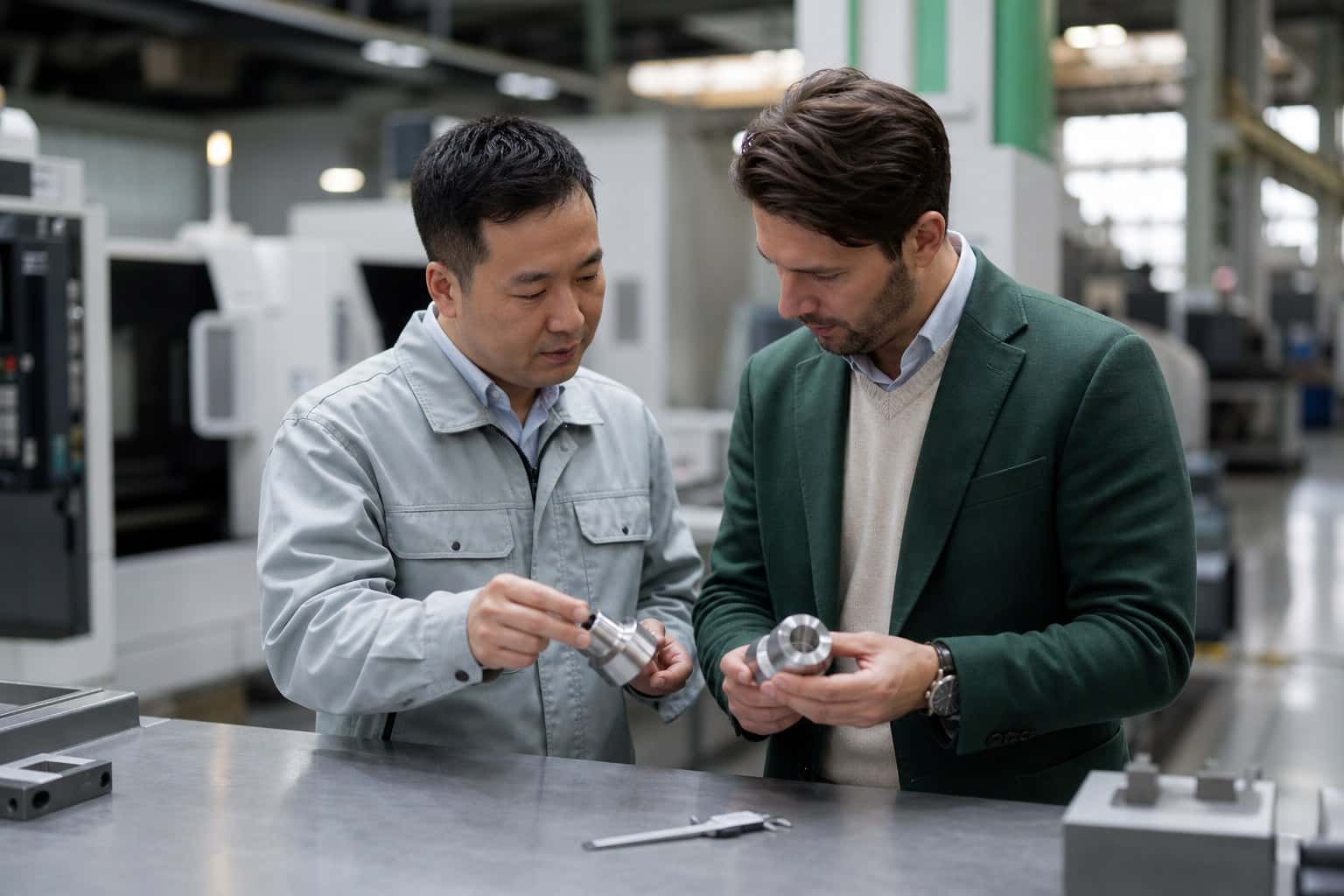
Choosing between Turkey and China for manufacturing is rarely a pure unit-price exercise. China still leads when the brief needs huge scale, dense sub-supplier networks and a stable bill of materials. Turkey often pulls ahead when the buyer cares about faster replenishment, lower inventory risk, easier factory access and smoother delivery into Europe or nearby markets.
That is the frame buyers should use in 2026. Freight, cash tied up in transit, defect handling and the speed of engineering changes can erase a cheaper factory quote very quickly. Corpenza's manufacturing support, import and export advisory and direct sourcing support are built around that full-cost view.
Which country is cheaper once you count landed cost?
China is often cheaper on pure unit cost for large, standardized orders. Turkey can be cheaper on landed cost when the buyer sells into Europe, needs smaller batches, or cannot afford long transit times and bulky safety stock.
The distinction matters more now because financing and inventory discipline are tighter than they were a few years ago. A factory quote that looks 8 or 10 percent lower is not automatically the better commercial decision if the shipment spends longer on the water and forces you to buy more stock upfront.
Invest in Türkiye's logistics brief says Türkiye sits within a 4-hour flight radius of 67 countries with a combined GDP of USD 30 trillion and a population of 1.3 billion. That does not guarantee a shipping date. It does explain why Turkish sourcing is attractive when buyers need shorter replenishment loops into Europe, North Africa and nearby markets.
When does China still win on cost?
China still wins when the product needs deep supplier ecosystems, complex components, or annual volumes large enough to reward scale. If the drawings are frozen and the buyer can plan long production runs, China usually keeps the edge on unit economics.
The scale advantage is still real. According to an official State Council release citing the General Administration of Customs, China's foreign trade reached 45.47 trillion yuan in 2025 and exports alone reached 26.99 trillion yuan. That volume supports dense tooling, packaging, component and logistics networks that are hard to match in one place.
And the manufacturing base is still active. In another official January 2026 release, the State Council said equipment manufacturing PMI stood at 50.1, still in expansion. For buyers of electronics, heavy assemblies and multi-tier parts, that depth remains a major reason China stays on the shortlist.
When does Turkey beat China on speed and flexibility?
Turkey is often the better answer when speed, lower MOQ pressure and easier engineering follow-up matter more than the absolute cheapest factory price. That is especially true for buyers serving Europe, the Balkans, the Gulf and North Africa.
Turkey's advantage is not just geography. The European Commission's Türkiye trade page notes that the EU-Türkiye customs union is in force and that bilateral goods trade exceeded EUR 217.6 billion in 2025. The same page says the EU exported EUR 114.3 billion of goods to Türkiye and imported EUR 103.3 billion. For industrial buyers, that means mature commercial lanes, familiar customs routines and a supplier base already built around EU-facing work.
This is where Turkey becomes practical. If you expect frequent reorders, seasonal demand shifts or design tweaks after the first shipment, shorter logistics and easier site visits can outweigh a lower headline quote from farther away.
Which country is easier to control for quality?
Neither country is automatically better on quality. Quality follows process control, inspection discipline and how fast problems are corrected. China often has deeper specialization. Turkey often gives buyers a shorter management loop.
That shorter loop changes outcomes. A buyer who can reach the plant faster, approve a correction sooner and resample without losing several weeks usually spends less money on surprises. For mid-volume industrial products, that can matter more than the first quote.
Turkey also has more industrial depth than many buyers assume. On the official Invest in Türkiye machinery page, the agency says the Turkish machinery sector exported USD 28.7 billion in 2025, serves more than 200 export destinations and employs about 502,000 people. That does not make Turkey a universal replacement for China. It does show that industrial capability is broad enough for serious sourcing programs, especially in machinery, fabricated metal, white goods components, automotive subparts and textiles.
How do MOQs and engineering changes compare?
Turkey is usually easier for smaller launches, pilot runs and products that are still moving after sampling. China becomes stronger when the product is locked, the forecast is stable and the buyer can reward a more rigid production plan.
Buyers feel this difference immediately. In Turkey, a supplier is often more open to a lower first run if the relationship looks repeatable and the drawing package is realistic. In China, the better economics usually appear when the order book is large enough to justify tooling, vendor coordination and longer planning windows.
Ask a better question than “Which country is cheaper?” How expensive is change in your category? If the answer is “very expensive,” flexibility deserves a real line in the sourcing model.
| Decision factor | Turkey | China | Usually better fit |
|---|---|---|---|
| Lead time to Europe | Shorter regional flows and easier replenishment | Longer ocean or rail planning for many categories | Turkey when speed matters |
| MOQ flexibility | Often easier for pilot runs and mid-volume orders | Better economics once volumes become large | Turkey for launches, China for scale |
| Supplier ecosystem depth | Strong in selected industrial sectors | Very broad across components and processes | China for complex BOMs |
| Factory access | Easier for Europe and MENA buyers | Longer planning and slower on-site correction loops | Turkey for tight oversight |
| Unit price at scale | Can be competitive in the right category | Usually stronger on very large, stable programs | China for high-volume repeat work |
Which products fit Turkey best, and which fit China best?
Turkey fits products where regional speed, practical communication and mid-volume production matter. China fits categories that depend on enormous supplier depth, broad component choice and scale across multiple process steps.
Turkey is a strong candidate for textiles, furniture, fabricated metal parts, white-label consumer goods, appliances, automotive subcomponents, packaging and many mechanical assemblies sold into Europe and nearby markets. China remains hard to beat in electronics, highly integrated multi-component goods, very large accessory programs and categories where the component ecosystem is as important as the final assembly line.
There is no need to turn this into a binary choice. A common 2026 structure is dual sourcing: Turkey for faster regional replenishment and China for large core programs with longer forecasting visibility.
How should a buyer decide in 2026?
Start with demand pattern, not country preference. If your product moves in stable, high volume and the supply chain is component-heavy, China usually deserves first place. If demand is uneven and the market is close to Europe, Turkey often deserves the first RFQ.
Then test the commercial model in four lines: unit price, freight and duty path, inventory days, and the cost of a defect or design change. That simple grid is often enough to expose the wrong country before money is committed.
If the picture is still mixed, run a disciplined RFQ on both countries with the same drawings, tolerances, packaging rules and inspection plan. Buyers who compare vague Chinese quotes against tightly specified Turkish quotes end up learning the wrong lesson. Keep the input equal. Then the result means something.
FAQ
Is Turkey always more expensive than China?
No. Turkey is often higher on unit price, but it can be cheaper on landed cost when freight is shorter, minimums are lower and the buyer does not need to finance long inventory turns.
Is China still better for electronics?
Usually yes. Electronics and component-dense products still favor China because the surrounding supplier ecosystem is deeper and easier to scale.
Can Turkey match China on quality?
Yes, in many categories. The result depends less on nationality and more on process capability, inspection routines, tolerances and how closely the supplier is managed after sampling.
Should EU-focused brands look at Turkey first?
Often yes. For EU-facing brands that value speed, smaller runs and easier factory access, Turkey deserves an early comparison instead of being treated as a backup option.
Is dual sourcing worth the effort?
For many buyers, yes. A China-plus-Turkey model can lower risk, shorten replenishment and give the business a second sourcing lane when freight or demand shifts suddenly.
This is general information, not legal or tax advice; the right sourcing structure depends on your product, volume and destination market.
If you want a live comparison based on your product, sample drawing and target market, Corpenza can help shortlist suppliers, structure RFQs, plan factory inspections and review import flows before you commit.