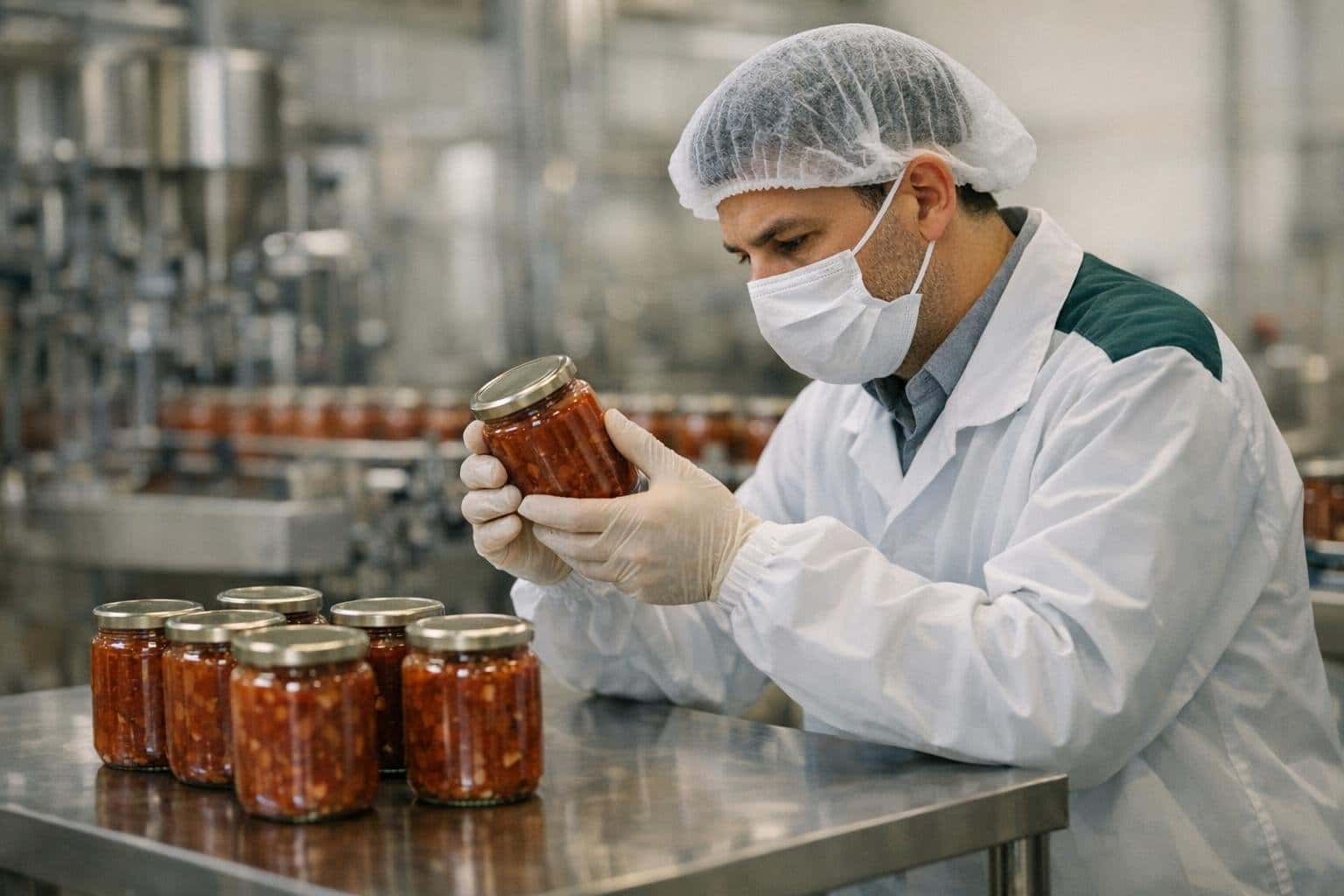
Turkey food manufacturing can be a practical sourcing route when the factory, product file and export lane are tested as one system. A polished sample is only the start. The buyer still needs evidence on batch control, hygiene practice, packaging, traceability and the documents the destination market will ask to see.
This guide is for importers, private-label teams and food brands buying from Türkiye. It explains the operational sequence. It does not replace product-specific legal or food-safety advice.
What should a food supplier audit in Turkey prove?
A useful supplier audit should prove that the factory can reproduce the approved product under controlled conditions and release it with a traceable batch record. Review the real line, not a showroom. Match ingredients, allergen handling, packaging, storage, cleaning routines and release checks to the exact SKU and destination.
Start with the production flow. Ask where incoming materials are checked, how lots move through the facility, who clears a batch for dispatch, and what happens when a result is out of specification. Photograph controls only where the factory permits it, then tie each observation to the purchase specification.
The Turkish Standards Institution's special-surveillance scope includes supplier evaluation, second- and third-party surveillance, conformity to specifications, standards and customer requirements, plus pre- and post-loading observation. That is a sensible structure for an independent buyer-side inspection plan.
Which records belong in the buyer's audit file?
Keep an audit file that lets a new team member understand how the product was made and released. At a minimum, retain the signed specification, ingredient and packaging approvals, process map, batch identifiers, relevant test results, label artwork version and corrective-action log. Make the file product-specific.
- Approved supplier and ingredient information, including allergen controls where relevant.
- Batch, cleaning, temperature or storage records that match the product risk.
- Packaging checks, coding controls and a retained-sample process.
- A pre-shipment release checklist linked to the purchase order.
Do not ask a factory to promise a certificate it cannot issue. Ask instead which authority, lab, standard owner or customer controls each requirement. That distinction prevents a common procurement mistake: treating a commercial assurance as a regulatory document.
How do Turkey's export controls affect the document pack?
The document pack depends on the product and the importing country. The Ministry of Agriculture and Forestry states that the receiving country's request governs its export controls; where that country has no different request, Law No. 5996 is considered. That makes destination-market review part of sourcing, not a dispatch-day task.
According to the Ministry's official export-controls guidance, the process can include pre-export permissions or facility checks in relevant cases, document checks, identity checks and physical controls. The published examples also refer to packaging, labelling, temperature control, sampling and laboratory analysis where needed.
Build a document matrix before the first commercial order. Put each document beside the party that owns it: factory, exporter, laboratory, freight forwarder, customs representative or destination importer. Then confirm the current destination requirements with the competent authority or qualified local adviser.
When should buyers inspect before loading?
Pre-shipment inspection is most valuable after the factory has released the batch and before goods are irreversibly loaded. It should compare the order, approved artwork, lot codes, quantity, visible condition, pallet pattern and shipping conditions against the agreed checklist. It is a control point, not a substitute for factory qualification.
For chilled, frozen or temperature-sensitive goods, confirm the handoff plan as well. The export file and the physical shipment must tell the same story. A missing lot reference or an unreadable pallet label can create a customs or recall problem later, even when the product itself is sound.
What is the practical first-order sequence?
Use a staged first order: screen the factory, audit the relevant line, approve a controlled sample, lock the product specification, map the export documents, then run a monitored production and loading release. A modest pilot exposes gaps while changes are still cheap.
- Define destination-market, ingredient, labelling and shelf-life requirements.
- Audit the production site and close material findings in writing.
- Approve the commercial specification and document matrix.
- Monitor the first production batch and pre-shipment release.
- Review the complete file after arrival before scaling the next order.
For broader line-selection questions, see Corpenza's guide to food and beverage co-packing in Turkey, or review manufacturing support and import and export services for an execution plan.
Frequently asked questions
Does an audit guarantee that food can enter every country?
No. An audit assesses the supplier and agreed controls. Entry conditions can still depend on the product, ingredients, labelling, certificates, border procedures and destination-market rules.
Can one document checklist cover every food product?
No. Keep a reusable template, then adapt it for the product category, processing method, claims, packaging and importing country.
Who should own the final export document matrix?
The importer should approve the commercial and destination requirements. The exporter and factory should confirm what they can support. Responsibilities should appear in the purchase order.
Is a good sample enough for a private-label launch?
No. The first production run needs the same scrutiny as the sample, plus batch records, packaging controls and a documented dispatch release.
This is general information, not legal or food-safety advice. Requirements change by product and destination.
Need a buyer-side factory and export-readiness plan? Contact Corpenza.