Food and beverage co-packing in Turkey works best when the buyer treats the project as an operating file, not a simple purchase order. Recipe ownership, allergen control, packaging specs, label language, line capability, and release rules all need to be clear before the first sample run. If those pieces stay vague, the cheapest quote often turns into the slowest and most expensive launch.
Turkey is not on buyers' shortlists by accident. Invest in Türkiye says the country's agriculture and food industry accounted for 6.5 percent of GDP in 2022, contributed USD 58.5 billion, and exported about 1,800 kinds of agricultural products to more than 190 countries. That scale helps. It does not remove the need for line-by-line qualification.
For the wider operating setup, see Corpenza's production and manufacturing desk, the import and export team, and our earlier guide to sourcing and manufacturing in Turkey. If you need a partner search, audit, or launch plan, use our contact page. This article stays on one question: how to qualify a Turkish co-packer without walking into a preventable delay.
What does food and beverage co-packing in Turkey usually include?
In most projects, the Turkish plant handles production, filling, packing, and day-to-day execution while the brand keeps control of the product brief, commercial target, packaging artwork, and destination-market requirements. That division is normal. The mistake is assuming the factory will quietly resolve every technical gap after the PO is signed.
Some co-packers only offer toll filling on an existing line. Others also source packaging, buy ingredients, manage pilot runs, and support export documentation. Those are very different service levels. A buyer who needs formulation support, shelf-life work, or retail-ready secondary packaging should ask for that in the first brief, not after the quote is already benchmarked.
Co-packing also covers different risk profiles. Dry blends, sauces, dairy, chilled products, beverages, and private-label snack lines do not belong on one generic checklist. The commercial conversation may sound similar. The factory controls do not.
Why is Turkey on so many co-packing shortlists in 2026?
Turkey stays attractive because industrial depth and logistics sit in the same market. Invest in Türkiye states that within a 4-hour flight radius the country reaches 67 countries, 1.3 billion people, and a combined GDP of USD 30 trillion. That matters in real projects. Faster site visits and shorter freight lanes make packaging corrections, pilot approval, and launch timing easier to manage.
The supply base is also broad enough to support different food categories. On the same official agrofood page, Invest in Türkiye notes 24 million tons of milk production in 2022 and describes investment opportunities across agribusiness subsectors. For a buyer, that does not prove a given co-packer is good. It does show why Turkey can support dairy, ingredients, packaged food, and adjacent sourcing ecosystems in one operating geography.
And company setup is not the hard part. Invest in Türkiye's business guide says international investors have the same rights and liabilities as local investors, company establishment runs through Trade Registry Directorates as a one-stop shop, and the process is completed within the same day when the file is ready. That helps when you need a local vehicle for contracting, warehousing, or staffing. It should not be confused with product qualification. That still takes work.
What should the buyer lock before asking Turkish co-packers for pricing?
Before price talks start, the buyer should already know the product category, target market, packaging format, and technical non-negotiables. A factory can quote line time and material assumptions. It cannot responsibly guess your allergen position, your acceptable waste level, or your retail shelf target after the fact.
At minimum, the working file should cover product formula or recipe ownership, ingredient specifications, microbiological or physical release limits where relevant, packaging bill of materials, pallet pattern, storage conditions, shelf-life target, label language, and destination-market rules. Keep that file in one version-controlled pack. Do not let critical instructions live only in chat messages and old sample photos.
It also helps to state the commercial shape early. Are you qualifying one SKU or ten? Are you asking for brand-owned materials, factory-procured materials, or a hybrid model? Will the first run be a pilot batch, a trial for a distributor, or a retail launch? Co-packers quote differently when those assumptions are explicit.
How do hygiene and product-line rules change the shortlist?
A Turkish food co-packer has to fit the actual product line, not just the buyer's category label. The Ministry of Agriculture and Forestry's Gıda İşletmecisi portal publishes separate hygiene and good-practice guides for food-contact materials, raw milk, dairy processing, bakery products, food retail, mass catering, fresh produce, and spice production. That is the point. A universal food checklist is not enough.
In practice, this means you should shortlist by product and process first. A plant that runs ambient dry blends well may be the wrong choice for chilled dairy. A facility that looks strong on private-label bakery may still be weak on allergen segregation, packaging validation, or retained-sample discipline for a beverage line. Buyers who skip that fit check often discover the mismatch only after sample approval.
Ask blunt questions. Which product families already run on the target line? What are the cleaning-changeover rules? How are allergens separated? Which CCP or release documents are issued batch by batch? The right factory answers quickly and with records. The wrong one answers with confidence and no paper.
What should a factory audit and pilot run cover?
A serious co-packing audit should test whether the line, the people, and the paperwork all match the same story. The Turkish Standards Institution says its special surveillance services cover supplier and dealer evaluation, second- and third-party surveillance, conformity to specifications, standards, regulations, and customer requirements, plus pre- and post-loading surveillance. That is a useful frame for private qualification too.
On the floor, look for line suitability, changeover discipline, traceability, cleaning records, storage practice, quarantine handling, and packaging control. In the office, check whether the batch file, specification sheet, release criteria, and complaint workflow are actually aligned. Many plants look fine from the corridor. Problems show up when you ask how a rework lot is documented or how a packaging deviation gets approved.
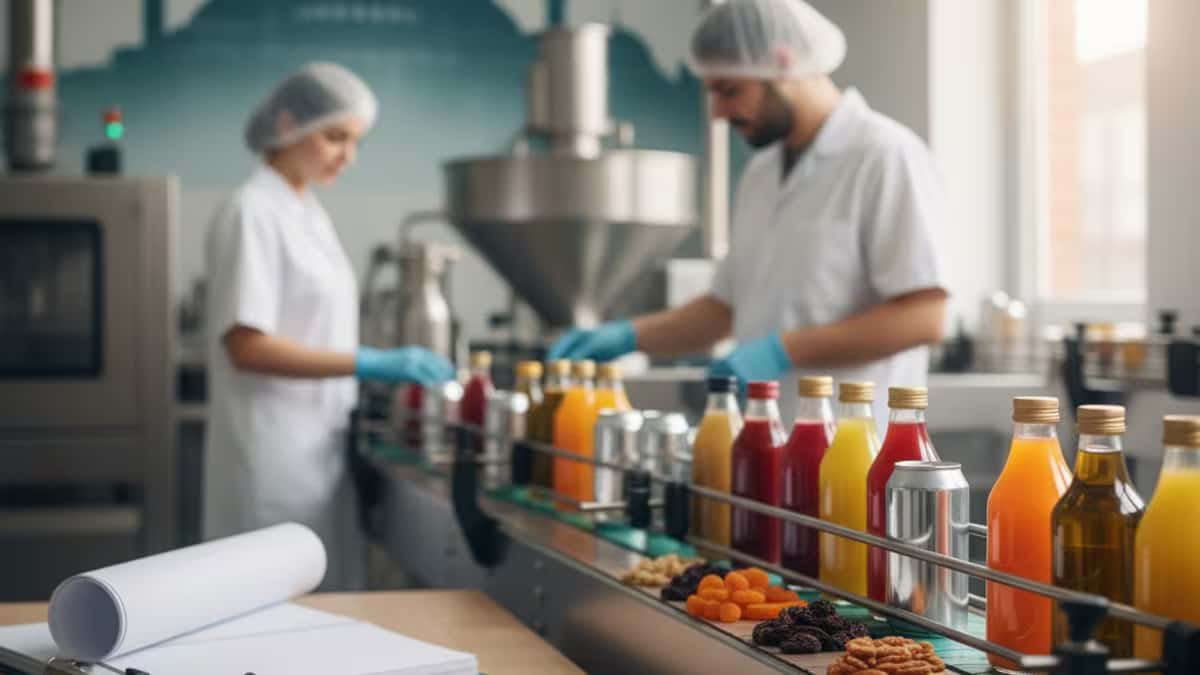
The pilot run matters just as much. Use it to measure fill accuracy, line loss, downtime, seal quality, coding discipline, carton durability, pallet stability, and dispatch readiness. A sample that tastes right is only step one. A batch that can be repeated at commercial speed is the real test.
Do you need a Turkish company before you start?
No, not always. Many buyers start with supplier screening, NDAs, technical review, samples, and commercial negotiation before they create a local entity. The decision usually depends on who will import, hold stock, hire staff, or sign the long-form operating agreements. The legal vehicle follows the route. It does not replace route design.
If the project does need a local company, the state setup path is fairly clear. Invest in Türkiye says the memorandum and articles of association are submitted online through MERSIS, the central registry system for trade-registration processes, and the Trade Registry step operates as a one-stop shop. That is useful when a buyer wants a Turkish base for warehousing or recurring production management.
Still, the entity question should come after the commercial model is stable. Open the company because the operating map needs it, not because a broker says it feels more serious.
What should the contract and launch plan include?
A workable co-packing contract should define the product specification, material ownership, approved suppliers, quality release logic, deviation approval, change-control rules, MOQ expectations, lead times, payment terms, complaint handling, recall cooperation, and exit mechanics. If any of those items are vague, the relationship will become expensive the first time packaging is late or a batch falls outside tolerance.
Spell out who owns the recipe, the artwork files, molds if any, barcode allocation, retained samples, and test reports. Then add a live launch plan. That plan should cover first PO timing, packaging arrival, pilot signoff, commercial run window, release documents, freight handoff, and who approves what when something slips. It sounds bureaucratic. Good. Food launches need bureaucracy in the right places.
This is general information, not legal or tax advice. Rules and practical requirements change by product, destination market, and operating model. If you are comparing Turkish co-packers now, Corpenza can help you shortlist plants, run factory checks, and structure the launch path before you commit to a full production batch.
FAQ: food and beverage co-packing in Turkey
Is Turkey a good place for private-label food production?
Yes, it can be, especially when you need an industrial base close to Europe and the wider region. But the right answer depends on line fit, hygiene scope, packaging execution, and whether the factory has already handled your product type at commercial scale.
Should I ask for samples before I audit the plant?
You can ask for early samples, but do not treat them as factory approval. A strong sample only proves the plant can make one controlled batch. It does not prove repeatability, changeover discipline, or documentation quality.
Can one Turkish co-packer handle every food category?
Usually no. Product families carry different hygiene and process rules. The official ministry guidance itself is split across multiple sector guides, which is a good reminder to qualify by process and risk, not by a broad sales claim.
When should I involve a local advisor?
Bring one in when you need factory screening, site visits, negotiation support, local document review, or a setup route that combines production with warehousing, importing, or staffing in Turkey. That is usually before the first commercial batch, not after it goes wrong.