
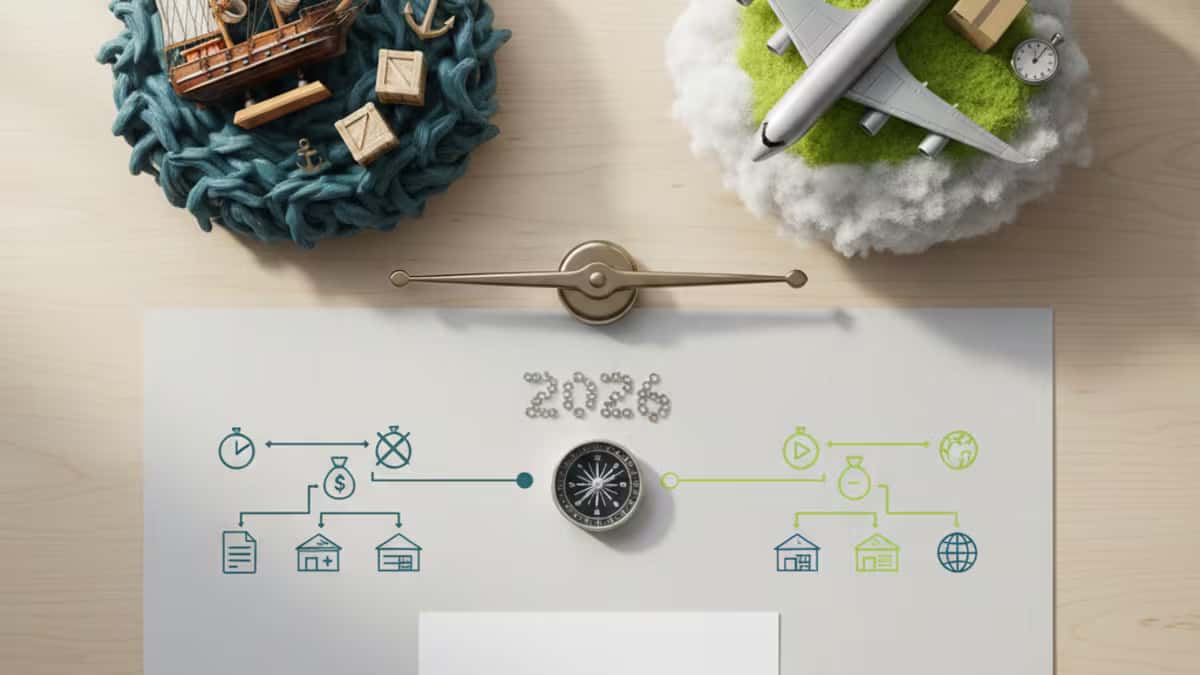
Sea versus air freight is not a style choice. It is a cash-flow decision, a stock-risk decision, and a margin decision. Air wins when delay costs more than freight. Sea wins when volume, predictability, and unit economics matter more than speed. The mistake is comparing only the carrier quote.
Official customs workflows point in the same direction. The GOV.UK import guide starts with importer readiness, and the European Commission's EORI guidance shows that customs identity has to be solved before cargo starts moving. If you need shipment mode, supplier control, and import setup aligned in one file, Corpenza's import and export team, supplier screening guide, and import-export business guide fit naturally into the same workflow.
What is the real choice between sea and air freight?
The real choice is time versus carrying cost. Air freight buys speed and flexibility. Sea freight buys lower unit transport cost and more room for bulky cargo. A serious comparison has to include urgency, inventory exposure, stock-out risk, and what happens to margin if the shipment arrives late.
That sounds obvious, but many teams still compare only per-kilo or per-container freight. They skip the commercial question. If a missed launch window, a production stoppage, or an empty warehouse costs more than the freight gap, air may be rational even when it looks expensive on paper. If the product is stable, bulky, and repeatable, sea usually gives you more breathing room.
When does air freight make commercial sense?
Air freight makes sense when the cargo is time-sensitive, relatively small, or high enough in value that speed protects revenue better than cheaper transport would. Samples, urgent replenishment, spare parts, launch inventory, and short-notice corrections usually sit in this category.
It is also useful when the shipment is buying information. A small air shipment can test packaging, customs handling, product-market fit, and warehouse intake before you commit to a larger sea order. That is expensive freight, yes. It can still be cheap learning. What air usually does not fix is a weak supplier file, vague product description, or a customs setup that was never prepared properly.
When does sea freight usually win?
Sea freight usually wins when the goods are bulky, margin-sensitive, and ordered on a repeatable rhythm. Once forecasts are stable and purchase planning is disciplined, sea transport tends to lower landed cost enough to justify the longer transit and earlier cash commitment.
The trade-off is obvious. You need cleaner forecasting, earlier bookings, and more tolerance for delay. Cash is tied up longer. Inventory sits in transit for longer. If the supplier slips and the buyer has no buffer stock, cheap freight can still create an expensive quarter. Sea works best when the business has already learned its reorder timing and knows how much variability it can absorb.
How do Incoterms and customs value change the calculation?
Mode choice without delivery terms is incomplete. The GOV.UK Incoterms guidance groups EXW, FCA, CPT, CIP, DAP, DPU, and DDP under any mode, while FOB, CFR, and CIF sit in the sea and inland-waterway group. The delivery-costs guidance also says transport costs up to the place of introduction into the UK customs territory belong in customs value.
That matters in practice. If a supplier quotes FOB for something that is actually moving by air or in a mixed transport chain, the file is already weak. If the business compares air and sea without checking which costs will still be inside customs value, the landed-cost model is also weak. The shipment mode, the delivery term, and the customs calculation belong on the same worksheet. Keep them together.
What should be checked before you book the first shipment?
Before booking, confirm importer identity, customs registration, cargo readiness, document quality, payment trigger, and fallback timing. The mode decision should happen only after those basics are visible. Otherwise you are using freight speed to cover for a preparation problem.
The UK step-by-step import guide begins with getting the business ready to import. The EU EORI page says economic operators established in the EU customs territory need an EORI number, and non-EU operators also need one when they lodge customs declarations or related filings. So treat mode selection as the last operational choice, not the first. And if payment risk is still open, read Corpenza's letters of credit guide before the shipment leaves.
How do buyers avoid expensive hybrid mistakes?
Strong buyers do not argue about sea versus air in the abstract. They define when each mode is allowed. Air can cover first samples, launch-critical SKUs, or genuine stock-out emergencies. Sea can handle the steady-state lane once demand, packaging, and supplier discipline are proven.
That kind of policy keeps panic from taking over the freight budget. It also forces the business to measure the right thing: not just transport price, but the full cost of arriving too early, too late, or with too much capital stuck in transit. If you need help structuring that decision sheet across sourcing, customs, and local setup, Corpenza's company setup team and advisory desk can support the wider file.
FAQ
Is air freight always better for a first order?
No. It is better for urgency and small learning runs, not for every first order. If the product is bulky and the delivery window is forgiving, sea may still be the cleaner commercial choice.
Is sea freight always cheaper?
Usually on transport cost per commercial unit, yes. But the cheaper freight rate can still become the more expensive decision if delay, inventory carrying cost, or stock-out exposure are high.
Can I use FOB for air freight?
Use caution there. GOV.UK places FOB in the sea and inland-waterway group. For air or mixed transport files, start by checking the any-mode rules instead.
Should I compare freight before customs setup is ready?
No. Importer identity, customs registration, and document readiness should be visible first. Freight mode cannot rescue a customs file that is still vague.
When should Corpenza be involved?
Bring Corpenza in when freight mode, supplier control, landed cost, and local business setup need to be managed together. That is where coordinated support usually saves the most money.
This is general information, not legal or tax advice. Rules change, customs treatment depends on the destination market, and the right freight mode depends on your product, margin, and timeline.