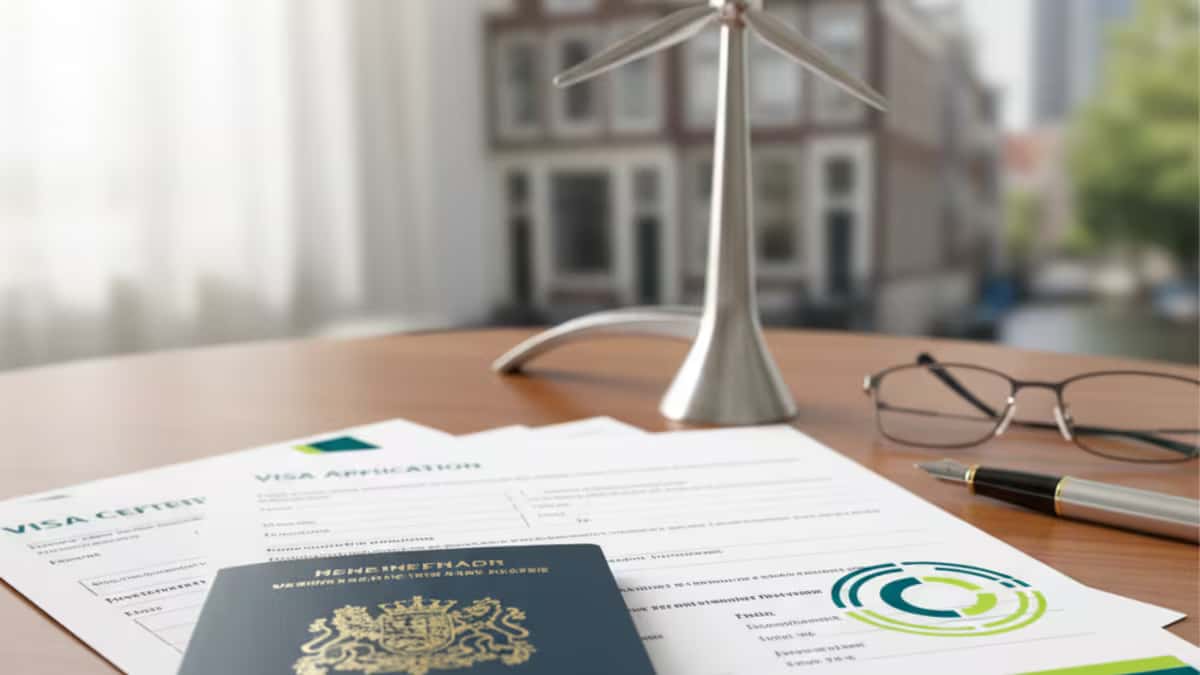
What most people call the Netherlands DAFT visa is not presented on official Dutch websites as one neat branded product. The rules are split across treaty references, the self-employed residence permit, the MVV exemption list, municipal registration, BSN, and KVK registration. That is why the right way to plan this move is not to memorize a slogan. It is to line up the sequence. Business.gov.nl says citizens of Japan and the United States may be able to use existing treaties with the Netherlands, such as DAFT. Government pages then explain the file through the self-employed residence permit, the MVV exemption rules, and the local setup steps you must complete on arrival. Corpenza's residence permit support, company formation and accounting service, and direct advisory team are designed around exactly that handoff.
The common mistake is to read DAFT like an automatic approval. It is not. A US passport helps. It does not replace a structured residence file, a real business plan, or the Dutch registration steps that make the move durable.
What do official Dutch sources actually say about DAFT?
They say US citizens may benefit from existing treaties, but the move still runs through a residence-permit framework for self-employed work. Business.gov.nl says citizens of Japan and the United States of America might be able to make use of existing treaties with the Netherlands, such as the DAFT. Government.nl says foreign self-employed people can work in the Netherlands under certain conditions and can apply for a residence permit for a self-employed person.
That wording matters. Dutch authorities do not build the route around marketing shorthand. They build it around legal residence, local registration, and actual business activity. So if you are a US founder moving to operate your own business, the file should be prepared as a founder file, not as an employment visa workaround.
In practice, that means the Dutch side wants to see a coherent operating story. Who will you invoice? What will you do from the Netherlands? Why does the structure belong there? Strong answers here save time later.
Do US citizens need an MVV before they move?
No. The IND MVV page says United States nationals are on the list of nationalities that do not need an MVV. That removes one consular layer. It does not remove the need for the correct long-stay residence basis.
This is where many founders get overconfident. No MVV does not mean no permit. It means the entry process is lighter for the US national. The underlying residence logic still needs to be right, and the business setup still needs to make sense on the ground.
So the better reading is simple: DAFT can make the route more practical for Americans, but it does not turn Dutch immigration into a casual arrive-first, fix-later exercise.
What should you line up before filing?
You should line up the business model, the address plan, the BSN path, the KVK registration plan, and the banking logic before the move starts gathering speed. Business.gov.nl says that if you intend to stay in the Netherlands for more than 4 months, you must register with the municipality where you will live, and that this must happen within 5 days after arrival. The same official page explains that the BSN comes from that registration.
The KVK side is just as important. The official registration guide says every new company in the Netherlands must register in the Dutch Business Register. That one line drives a surprising amount of the real-world workflow.
- Define what the business will actually do from the Netherlands, not just the broad vision.
- Work out the residential setup early if the stay will exceed 4 months, because BSN and municipal registration sit under many later steps.
- Choose the entity that fits the operation and your risk profile.
- Make sure contracts, invoicing, bankability, and bookkeeping all point to the same structure.
When those pieces are prepared in isolation, the residence file may look polished on paper and still feel weak in practice. Dutch systems are good at spotting gaps between the story and the setup.
Which Dutch entity usually makes the most sense?
There is no universal answer. Some one-owner files work cleanly with a sole proprietorship. Others are better served by a Dutch BV because of liability, future investment, or counterparty expectations. Business.gov.nl says a Dutch BV does not require starting capital, which is useful, but it should not be the only factor in the choice.
The better question is this: which structure will your bank, clients, accountant, and future investors understand without friction? In some files, the simpler route wins. In others, starting with a BV avoids a second restructuring round a few months later.
A bad entity choice rarely explodes on day one. It usually creates quiet problems with banking, contracting, or governance once operations begin.
What compliance points matter in the first year?
Dutch health insurance is one of the first real deadlines. Government.nl says you must take out Dutch health insurance within 4 months of your residence permit coming into force. The policy must be effective from the date the permit starts. That is not a cosmetic detail.
Then there is consistency. Your municipal registration, KVK data, bank use, and actual business activity should tell the same story. If the operating picture looks different in each system, questions tend to follow.
And then there is bookkeeping. Many founder moves get past the residence stage and then stall on compliance discipline. The immigration file is only the entry point. The operating file has to stay clean after arrival.
What mistakes slow real DAFT files down?
The first mistake is reading the treaty angle as automatic permission. The second is assuming that an MVV exemption means a full immigration exemption. The third is treating municipality, BSN, KVK, banking, and residence as separate projects.
A quieter mistake is leaving the business model too abstract. “I want an EU base” is not enough on its own. Dutch authorities and banks want to understand what the company will actually do, where the revenue comes from, and why the structure belongs in the Netherlands.
Timing mistakes also hurt. Founders sometimes scale up housing, family, and school planning before the residence spine is firm. The order works better the other way around. Build the permit logic first. Then expand the relocation calendar.
Frequently asked questions
Is DAFT a separate sticker visa?
Official sources usually do not present it that way. In practice, the route is best understood as a treaty-supported founder path that still sits inside the residence framework for self-employed work.
Does no MVV mean I can work immediately?
No. The IND says US nationals do not need an MVV, but you still need the correct long-stay residence basis and a proper Dutch setup.
When do I get a BSN?
Business.gov.nl says that if you will stay more than 4 months, you register with the municipality within 5 days after arrival, and that registration gives you the BSN.
Do I have to register with KVK?
Yes. The official KVK registration guide says every new company in the Netherlands must register in the Dutch Business Register.
When must health insurance be in place?
Government.nl says Dutch health insurance must be arranged within 4 months after the residence permit comes into force. This article is general information, not legal or tax advice.
For US entrepreneurs, the Netherlands is workable when the move is prepared in the right order. Read the official pages early. Choose the structure carefully. Do not treat the MVV exemption as the whole story. If you want help stitching the residence, entity, and compliance layers together, Corpenza's residence permit and company formation teams can run the process end to end.