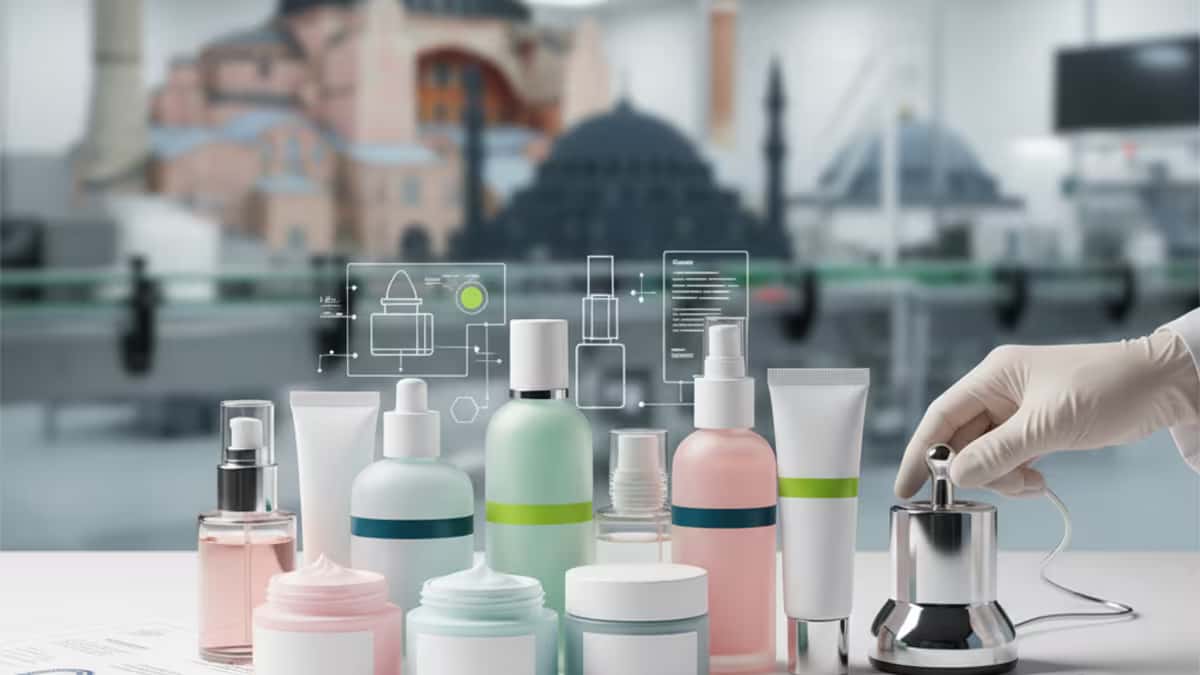
Cosmetics and personal care manufacturing in Turkey works best when the foreign brand manages the file like a regulated product launch, not a simple sourcing order. Formula ownership, artwork control, packaging specs, microbiological limits, batch traceability, and launch compliance all have to stay visible from day one. If those pieces are vague, the cheapest sample usually becomes the most expensive production run.
For the wider operating setup, see Corpenza's production and manufacturing desk, the import and export team, and our contact page. This article stays practical. It explains what foreign brands should lock before they shortlist an OEM or private-label supplier in Turkey, and where the regulatory file starts to matter.
What does cosmetics and personal care manufacturing in Turkey usually involve?
In most cases, a Turkish manufacturer handles filling, mixing, packaging, procurement, and plant execution while the brand keeps control of the formula brief, claims, packaging language, and go-to-market rules. That split works well. It fails when the brand expects the plant to make silent decisions about compliance, claims, or destination-market fit.
The product categories are broad: skin care, shampoos, soaps, body care, hair styling products, wipes, and private-label lines for retail or e-commerce. Some files are simple contract filling projects. Others need full development support with stability work, packaging sourcing, pilot batches, and export documentation. The bigger the scope, the more you need one controlled master file instead of scattered approvals in chat threads.
Keep the workflow grounded. Cosmetic production is still manufacturing. But it is manufacturing with a live regulatory layer attached to every label claim, ingredient list, and release decision.
Why do overseas brands choose Turkey for this category?
Brands choose Turkey because it gives them a practical factory base close to Europe, MENA, and Central Asia, while still offering meaningful industrial depth. The European Commission's Türkiye trade page says the EU-Türkiye Customs Union entered into force on 31 December 1995 and that bilateral goods trade reached a record high of over EUR 217.6 billion in 2025. That does not prove every factory is good. It does show why Turkey stays commercially relevant.
Geography helps more than most pitch decks admit. Invest in Türkiye says the country offers access to 1.3 billion people and a combined market worth USD 32.1 trillion within a 4-hour flight radius. For beauty and personal care buyers, that means easier plant visits, shorter sample loops, and fewer long-distance surprises when artwork, fragrance, pump fit, or carton finish need to be approved quickly.
Labor depth matters too. Invest in Türkiye also states that more than 6.5 million students are enrolled in higher education and that over 850,000 university graduates enter the market each year. In practice, that shows up in formulation support, packaging engineering, lab routines, and production supervision. It is not a guarantee. It is a useful operating signal.
What should a brand prepare before asking Turkish factories for samples or quotes?
Before you ask for pricing, you should already know what the product is, how it will be packed, where it will be sold, and which claims you want to make. A cosmetics OEM can quote manufacturing, filling, and packaging. It cannot responsibly invent your claim substantiation, your release criteria, or your destination-market checklist after the fact.
- Formula file: target texture, ingredient framework, restricted ingredients check, preservative approach, fragrance direction, and claim boundaries.
- Packaging file: primary packaging, pump or cap type, fill volume, carton spec, artwork version, barcode logic, and transport requirements.
- Quality file: microbiological limits, appearance standard, compatibility testing, batch-release checkpoints, and complaint handling route.
- Commercial file: annual volume, MOQ tolerance, pilot-batch expectation, tooling responsibility, payment terms, and Incoterms.
That package does not need to be fancy. It does need to be controlled. Many weak launches begin with a sample that looks acceptable on a desk but was never tied to a final formula code, a final bottle supplier, or a final artwork approval. Once production starts, that vagueness becomes rework.
Which Turkish regulatory steps matter before a cosmetic product goes to market?
If the product will be placed on the Turkish market, the regulatory file is not optional. TİTCK's notification page states that under Law No. 5324, notification to the Ministry of Health is mandatory before a cosmetic product is placed on the market for the first time, and changes in the product or manufacturer must also be notified. The same page says the responsible person files the notification through the Product Tracking System, or UTS, with the original label, a Turkish label if the original is not in Turkish, and the packaging visual.
TİTCK's UTS page also says the cosmetics product-management functions of UTS went live on 2 March 2016, and that company registration, authorized-user registration, and cosmetics product notifications are handled through UTS. That gives foreign brands a practical warning: your launch path is not only about finding a filler. It is also about deciding who the responsible person is, who controls the notification record, and who updates the file when packaging or formula details change.
If the product is being made in Turkey for export only, the Turkish market-notification question and the destination-market compliance question should still be treated as two separate workstreams. Good factories understand that distinction. Weak ones blur it and create avoidable risk.
What has to sit inside the product file and technical responsibility chain?
The product file must be ready before anyone pretends the launch is under control. TİTCK's product information file page says the responsible person keeps the file ready at the address shown on the label, in electronic or another format, and that it can be prepared in Turkish or English. The same page lists the core contents: composition, reference identification, physico-chemical and microbiological specifications, GMP method statement, safety report, undesirable-effects data, and documents supporting product claims.
The responsibility layer is just as important. TİTCK's responsible technical personnel page says facilities cannot operate without a responsible technical person and that this person is responsible for checking whether the product to be placed on the market complies with cosmetics legislation, good manufacturing practices, and related rules. That is an operational point, not just a legal footnote.
So ask direct questions early. Who is the responsible person on record? Who is the responsible technical person? Who keeps the product information file? Who signs off changes to formula, fragrance, packaging, and claims text? If the answers stay fuzzy, the supplier relationship is not ready for scale.
How should you qualify the factory, sample, and first production batches?
A good qualification process checks the plant, the sample logic, and the batch-control discipline in that order. Pretty samples come first in most sales conversations. That is backwards. The real test is whether the factory can repeat the same result at batch level while keeping filling accuracy, packaging consistency, hygiene, and release evidence under control.
Start with a plant walk. Review zoning, cleaning logic, line clearance, raw-material storage, artwork control, retained samples, and how non-conformities are logged. Then test the sampling discipline. One bench sample tells you very little if the pump leaks on the pilot run or the carton scuffs during freight. Finally, review the first production batch like a commercial event, not a routine trial. Check release criteria, coding, finished-goods segregation, and complaint traceability.
If the brand is new to Turkish sourcing, Corpenza's manufacturing support team and trade desk can help align the factory review with shipment planning so production and export do not drift into separate conversations.
What should the OEM or private-label agreement cover?
The agreement should lock the formula reference, approved packaging set, claims language, testing responsibility, change-control rules, confidentiality, tooling ownership, and the route for batch rejection or recall. If the contract only names a product and a price, it leaves the real commercial risk outside the signed document.
Cosmetics files need a few points spelled out clearly. Which formula code is binding. Which artwork version is binding. Who may approve substitutions in fragrance, preservative, bottle resin, pump, carton, or shipper. Who owns molds and artwork files. What happens if stability, compatibility, or microbiological release fails. Who pays for repacking if the label is wrong. None of those questions feels dramatic at quotation stage. Every one of them becomes dramatic after shipment.
Keep the contract readable. But keep it sharp.
Where do overseas beauty brands usually lose time or margin?
They usually lose it in three places: weak briefs, slow approvals, and blurry ownership of compliance updates. The factory keeps moving. The brand keeps revising the formula, the artwork, or the launch story. Weeks pass, then the team discovers that the commercial sample, the notified label, and the actual batch configuration are no longer identical.
The second margin leak is false certainty. A low quote can hide expensive decisions that were never written down, such as thinner secondary packaging, a different pump supplier, a shorter hold test, or a narrower complaint-response promise. And once cross-border freight enters the file, small packaging errors stop being small. They turn into relabeling cost, stock delays, and distributor friction.
Use the Corpenza blog for related sourcing material, or move directly to the contact page if you need supplier screening, plant coordination, or launch-file support in Turkey.
Frequently asked questions
Is Turkey suitable for private-label skin care and hair care production?
Yes, provided the supplier is qualified properly and the brand keeps control of formula, packaging, claims evidence, and release criteria. The commercial sample alone is never enough.
Does Turkish notification happen after the first sale?
No. TİTCK states that notification is mandatory before the cosmetic product is first placed on the market, and later product or manufacturer changes must also be notified.
What is the practical role of UTS in cosmetics?
UTS is the operating system for registrations and notifications. TİTCK says company registration, user registration, and cosmetics product notifications are handled through that system.
What is the product file that buyers should ask about?
The product information file. TİTCK says it should be ready at the label address and include composition, specifications, GMP method statement, safety report, and supporting claim documents.
Can Corpenza help before the first production order is placed?
Yes. Corpenza can support supplier screening, plant review, agreement scoping, export coordination, and the handoff between production and market-entry workstreams.
This is general information, not legal or tax advice. Product rules, launch duties, and commercial risk depend on the product, target market, and contract structure.