

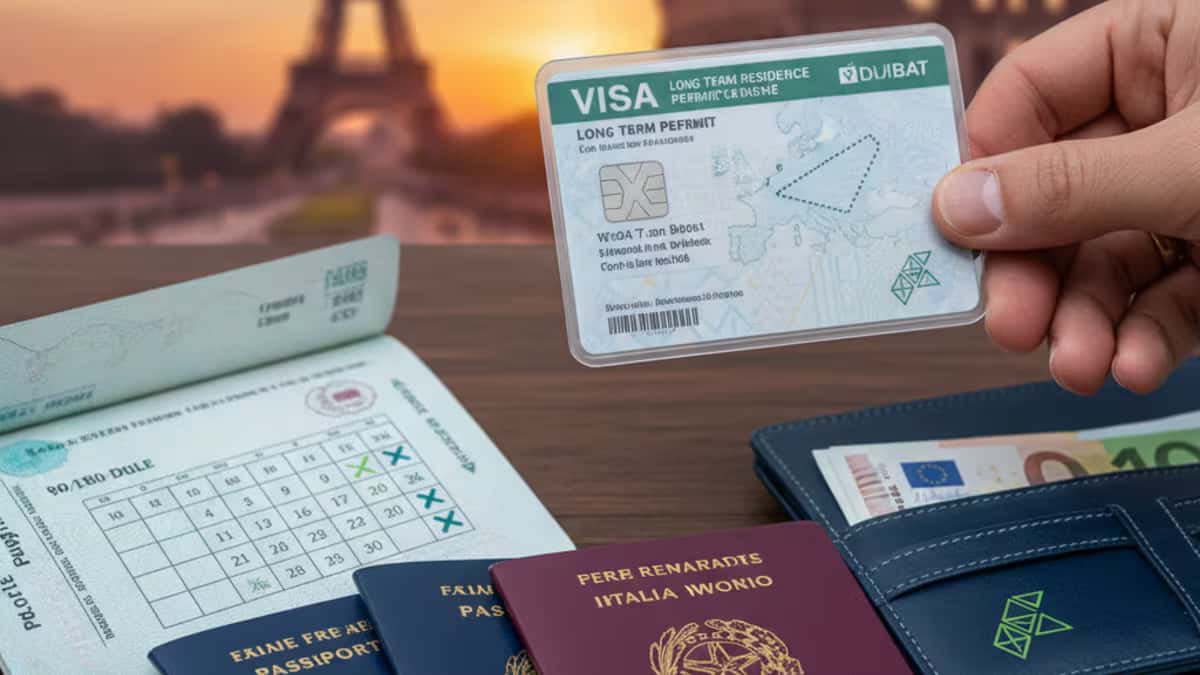
A long-stay visa or residence card does not give its holder unlimited residence across Schengen. The issuing country authorises the stay covered by its document. Visits to other Schengen states usually bring the 90 days in any 180 days rule back into focus.
How does the 90/180 rule apply to a long-stay resident?
The European Commission defines a short stay as no more than 90 days in any 180-day period. Its official short-stay calculator says that time authorised by an EU residence permit or a D-type long-stay visa is outside that short-stay calculation. That does not create a right to spend more than 90 days in another Schengen country.
For example, a Spanish residence-card holder can live in Spain under that card. Short trips to France, Italy or Germany must still fit within the rolling 90/180 allowance.
Where does a residence permit allow you to live?
A national residence permit normally authorises residence in the state that issued it. The Commission’s EU Immigration Portal says a person moving to another EU country for more than 90 days needs that country’s long-stay visa or residence permit. It also confirms that a valid long-stay visa or permit from a Schengen state supports travel to another Schengen state for up to 90 days per 180 days.
Choose the purpose, work rights and renewal conditions before you move. Corpenza’s residence-permit support can help map the country choice and application sequence.
Why do day counts go wrong so often?
The allowance is a rolling window, not a calendar quarter. On each day of travel, count back 180 days. Entry and exit days count. Use the Commission’s short-stay calculator to check past travel and test a planned entry before booking.
Flight records, accommodation confirmations and border stamps do not always line up. Keep a single travel log with every entry and exit date. It is much easier to explain a count that you have documented.
Are travel rights, work rights and tax residence the same?
No. A travel allowance does not grant local work authorisation, and a long stay does not settle tax residence by itself. The country, purpose of stay and factual presence all matter. Read the tax implications of European residency permits alongside any relocation plan.
For founders and employees planning a move, our remote-worker relocation guide explains why the immigration file should be set before the working arrangement.
Frequently asked questions
Does my residence permit remove the 90/180 rule completely?
No. It covers authorised residence in the issuing country. Short visits to other Schengen states remain subject to the 90/180 limit.
Can I work in another Schengen country with a D visa?
Do not assume so. Work rights follow the rules of the issuing country and the host country. The other country may require its own permit.
What if I want to stay in another country for more than 90 days?
Apply under that country’s long-stay visa or residence-permit route. Your existing national card does not replace it.
Is this individual legal or tax advice?
No. Nationality, permit type and purpose of travel change the outcome. Check the current rules with the competent authority before filing or moving.
This article is general information, not legal or tax advice.