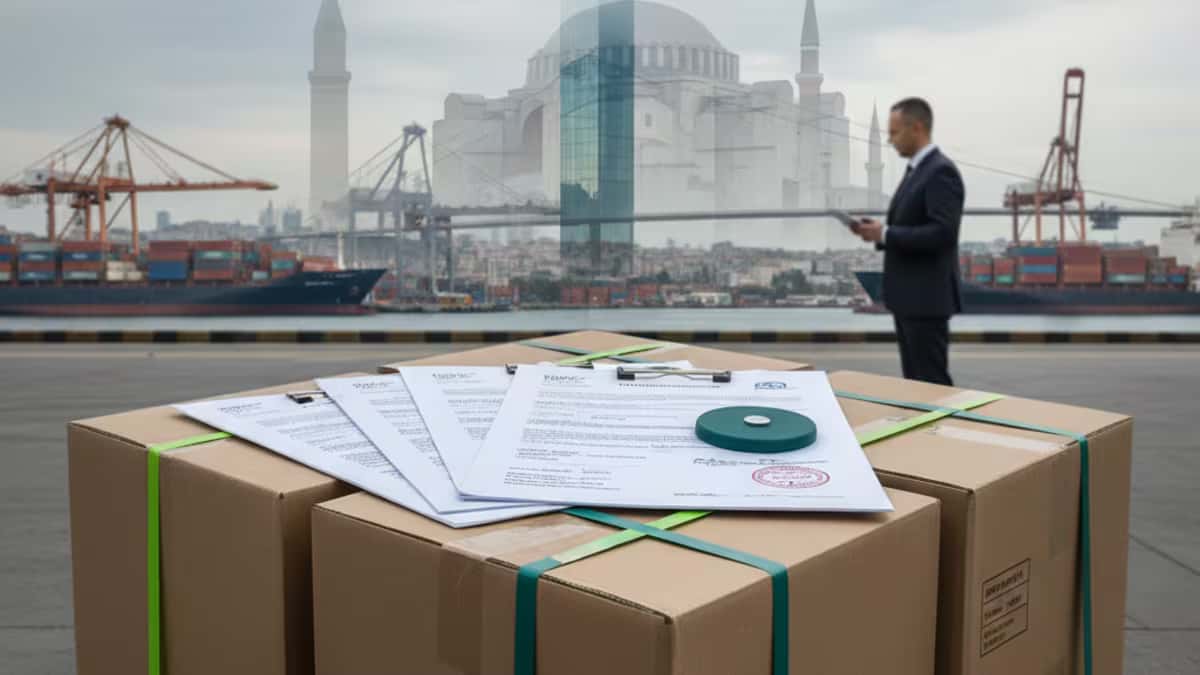
Customs clearance looks administrative until a shipment stops moving. Then every loose detail matters at once, product code, value, origin, paperwork, and who is actually named as the importer. Most first delays are not dramatic legal disputes. They start with a weak file.
The European Commission's customs duties guidance reduces the duty calculation to three pillars: tariff classification, customs value, and origin. That is a useful way to think about clearance in general, even outside the EU. If one of those three is shaky, the customs conversation gets expensive fast.
If your team is still setting up the operating structure behind the shipment, Corpenza can connect import and export support, company formation and accounting, compliance review, and the handoff into an active project file.
What is customs clearance, and what do authorities actually check?
Customs clearance is the formal release process that lets goods enter a country after the authority checks the tariff code, the customs value, the origin position, and any product-specific controls. The labels differ by market, but those core checks sit behind almost every import file.
Importers sometimes treat clearance as the broker's last step. It starts earlier than that. The real file is built when the product is described, the commercial terms are agreed, and the importer entity is chosen. By the time the goods land, customs is testing whether those earlier decisions still line up.
That is why two shipments with the same supplier can clear very differently. One has a clean description, a stable valuation logic, and documents that agree with each other. The other arrives with shortcuts and guesses. Customs can see the difference immediately.
What should be fixed before the goods leave the supplier?
Before shipment, lock the importer entity, the declaration party, the commodity code, the valuation logic, the Incoterm, and any identifier the market requires. In the EU, the Commission's EORI guidance says businesses involved in listed customs activities need an EORI number before those formalities begin.
The GOV.UK import step-by-step guide makes the same operational point from another angle. Early in the process it tells importers to decide who will make customs declarations and to find the commodity code for the goods. Those are not clerical details. They drive cost, responsibility, and timing.
Also settle who is buying, who is selling, and who takes customs risk under the contract. If the invoice names one entity, the transport file names another, and the declaration is prepared for a third, you have created your own border problem.
Which documents usually decide whether goods clear or stall?
A basic import file usually lives or dies on the commercial invoice, packing list, transport document, tariff classification support, and any origin or product certificates needed for the route. If you claim a preference or a reduced duty rate, the supporting proof has to match that claim cleanly.
The invoice is where many avoidable arguments begin. Descriptions such as “parts”, “samples”, or “accessories” are too vague when the customs code and duty rate depend on what the product actually is. Quantity, material, function, and realistic transaction value should read like they belong to the same shipment.
And do not forget country-specific controls. Food, cosmetics, chemicals, medical items, timber, batteries, and electronics can trigger extra permits, registrations, or safety rules. The EU Access2Markets portal is a good official example of how markets surface those formalities before the goods move.
Who should file the declaration, and how much should the importer keep in-house?
Many importers use a customs agent or transporter to submit declarations, but the importer still owns the commercial truth inside the file. Outsourcing entry does not outsource responsibility for bad descriptions, wrong values, missing permits, or an importer structure that makes no sense.
GOV.UK says most businesses that import goods use a transporter or customs agent, and that is sensible. The mistake is assuming the agent will invent missing data, repair a confused commercial chain, or decide classification for you without risk. Good agents execute. They do not magically replace internal control.
The practical split is simple. Let the broker handle the filing mechanics and local customs interface. Keep product knowledge, pricing logic, origin evidence, and approval authority inside the business. That is the only setup that scales once shipments become regular.
What usually delays first shipments, and how do you prevent it?
First shipments usually stall because the file was built too late. Vague invoice lines, mismatched weights, weak origin evidence, missing identifiers, and product rules checked after booking are more common than headline customs disputes. Prevention is mostly disciplined preparation done a few days earlier.
A boring pre-shipment checklist saves far more money than a heroic border rescue. Confirm the importer of record. Confirm the commodity code. Confirm whether origin is being claimed and what proof supports it. Confirm that the invoice, packing list, and transport file tell the same story. Then confirm whether the destination market has any licence or safety gate you have not covered.
If that checklist is still scattered across email threads, fix the process before volume grows. Corpenza can help turn one-off import runs into a repeatable file through trade operations support, compliance review, and a clear escalation line through the contact desk.
Frequently asked questions
Does customs clearance only mean paying duty?
No. Duty is only part of the file. Clearance also checks classification, value, origin, restricted-goods rules, and whether the documents and importer details are coherent.
Do all importers need a customs identifier like EORI?
Many markets require an importer identifier. In the EU, the Commission states that businesses carrying out listed customs activities need an EORI number. Other countries use their own registration logic.
Can a customs broker solve a weak invoice or wrong HS code on arrival?
Sometimes a broker can repair a small issue, but that should never be the plan. If the commercial description or classification logic is weak, the importer still carries the cost and delay risk.
Which document is most often underestimated?
The commercial invoice. It feeds value, product description, counterparty identity, and often the first customs reading of what the shipment really is.
What is the best first control for a new importer?
Build one clean pre-shipment checklist and make every supplier follow it before cargo leaves. That single habit removes a surprising number of border problems.
This is general information, not legal or tax advice. Customs rules change by product, country, and transaction structure.