

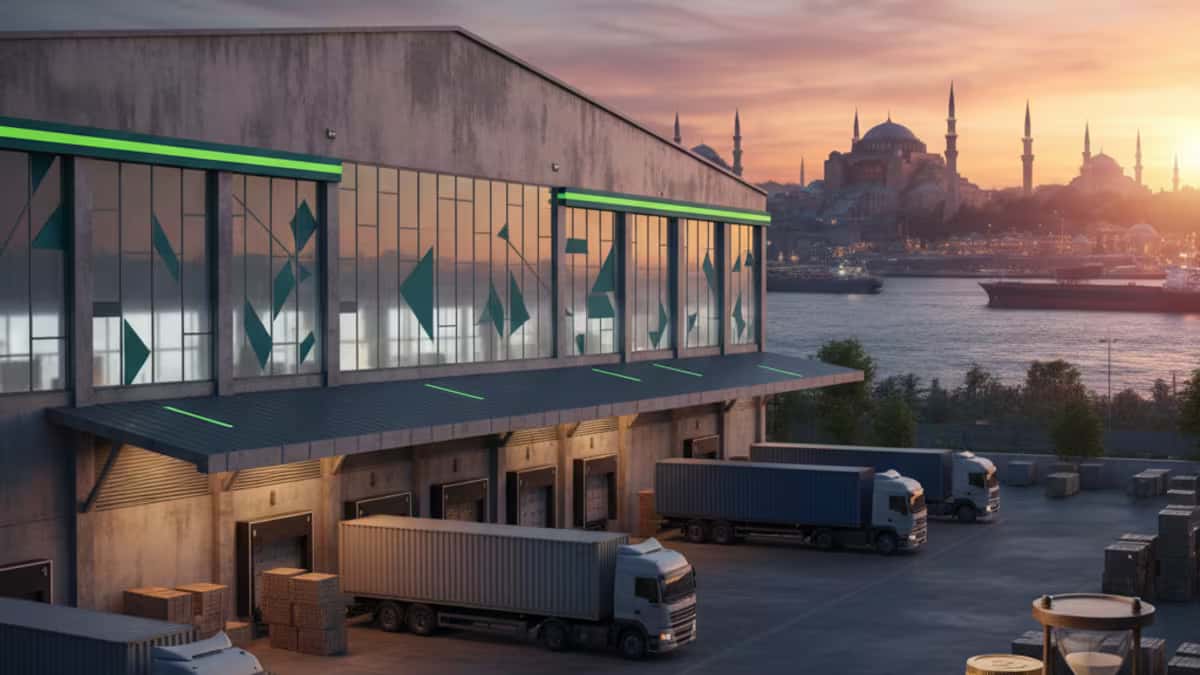
Bonded warehouses solve a very specific trade problem. Your goods have arrived. Your buyer is not ready, your customs plan is not final, or your cash should stay in the business a little longer. In that gap, a bonded warehouse can be a useful control point.
If you are building the wider trade stack, Corpenza's import and export support, guide on starting an import-export business, note on product compliance and CE marking, and article on managing currency risk help put warehousing decisions in the right order.
What is a bonded warehouse?
A bonded warehouse is a customs-controlled storage facility for imported goods that have not yet been released into the domestic market. The European Commission says customs warehousing stores non-EU goods in authorised premises while duties stay suspended. In the UK, HMRC says duty and import VAT are delayed. In the United States, 19 CFR 144.5 allows warehousing for up to five years from importation, unless CBP grants more time.
In plain English, the goods are inside the country, but they are not fully cleared for local sale yet. That difference matters for cash flow, recordkeeping, and timing.
When does a bonded warehouse save money or time?
It helps when inventory arrives before the commercial plan is settled. If you expect to re-export part of the stock, split shipments later, or wait for customer orders, deferring duty can protect working capital. HMRC states that duty and VAT do not become payable if the goods are re-exported or moved into another customs procedure instead of free circulation: official UK guidance.
This is why bonded warehousing is common in seasonal trade, consolidation flows, and cautious market-entry projects. You are buying time without pretending the customs bill has disappeared.
Is a bonded warehouse the same as free circulation or a free zone?
No. Free circulation means the goods have cleared import formalities and the import taxes are due now. The EU storage page is useful here because it separates customs warehousing from free zones. Both are storage tools, but they are not the same legal setup and they do not give the same operational flexibility.
| Option | When duties usually become due | Typical use |
|---|---|---|
| Bonded warehouse | When goods are released for domestic consumption | Hold stock before sale, re-export, or another customs step |
| Free zone | Depends on exit into the domestic market | Port-adjacent storage or staging under a separate zone regime |
| Free circulation | At import clearance | Immediate local sale or use |
For traders, the practical question is simple. Do you need time and customs control, or are the goods ready for local sale today?
What can you actually do with goods inside a bonded warehouse?
You can store them, and in some systems you can do limited handling. You should not assume full manufacturing rights just because the goods are inside a bonded facility. HMRC says only certain "usual forms of handling" are allowed in a UK customs warehouse, and goods requiring real processing should move to inward processing instead: HMRC warehouse guidance.
The safe operating rule is to map the activity before the goods arrive. Relabelling, sorting, packing, sample pulls, and customs documentation are one conversation. Transformation or repair can be a different customs procedure entirely.
Should you run your own bonded warehouse or use a third-party operator?
Most traders should start with a third-party public warehouse unless their volumes are predictable and recurring. Running your own facility creates a compliance stack. The European Commission says warehouse facilities need customs authorisation. HMRC recommends applying at least two months before use. In the US, 19 CFR 19.2 requires a written application, an inventory-control and recordkeeping manual, security approval, and a bond.
If you only need strategic storage in a few lanes, buying the service is usually cheaper than building the compliance machine yourself.
Which mistakes create cost or delay?
The expensive mistakes are usually operational, not theoretical. Traders get into trouble when they treat a bonded warehouse as ordinary storage and only ask customs questions after the container is already on the floor.
- Choosing bonded storage before confirming whether the goods may later be re-exported, processed, or sold locally.
- Ignoring inventory controls and document trails required by the warehouse operator or customs authority.
- Mixing up bonded warehousing with free zones, temporary storage, or inward processing.
- Waiting too long to arrange authorisation, banking, insurance, or guarantee support for a self-operated site.
FAQ: bonded warehouses for traders
Do I avoid duty forever by using a bonded warehouse?
No. You are usually deferring duty, not deleting it. The charges normally become due when the goods are released into domestic circulation. If the goods are re-exported or moved into another qualifying procedure, the outcome can be different.
Can any trader use a bonded warehouse?
Yes, in many markets traders can place goods in a public customs warehouse through an authorised operator. Running the warehouse yourself is the harder step because that is where authorisation, controls, and security requirements become heavier.
How long can goods stay there?
That depends on the jurisdiction. The EU storage page says customs warehousing can be unlimited unless the goods create health or environmental concerns. The current US rule says goods must not remain beyond five years from importation unless CBP grants a discretionary extension.
When is bonded warehousing a poor fit?
It is usually a poor fit when the goods will be sold locally right away and there is no timing benefit. In that case, the extra customs layer can add cost without creating much commercial value.
This is general information, not legal or tax advice. The right customs route depends on the goods, destination country, and operator setup.
If you need help comparing bonded warehousing, direct import clearance, and re-export flows, Corpenza can map the process, paperwork, and cost points before the shipment lands.